What an Interior Designer Actually Does, and Why It Changes the Result
When people think about hiring an interior designer, they often picture fabric samples, paint charts, and selecting beautiful furniture. And yes, those things are part of it. But they are only the visible layer.
The real value of interior design happens long before the cushions are placed or the artwork is hung. It happens in the thinking, the planning, and the decisions that prevent costly mistakes and create a home that feels effortless to live in.

Clarity: Translating Your Brief Into a Plan
Most clients come to me with a feeling rather than a fully formed plan. They want their home to feel calmer, more connected, more cohesive, but they’re not sure how to achieve that.
My role is to translate those emotions into structure. That means understanding how you live, how you move through the space, and what currently isn’t working. From there, I develop a clear concept and layout that supports your lifestyle, not just the aesthetic.
Without that clarity, even beautiful rooms can feel unresolved.
Flow: Layouts That Work in Real Life
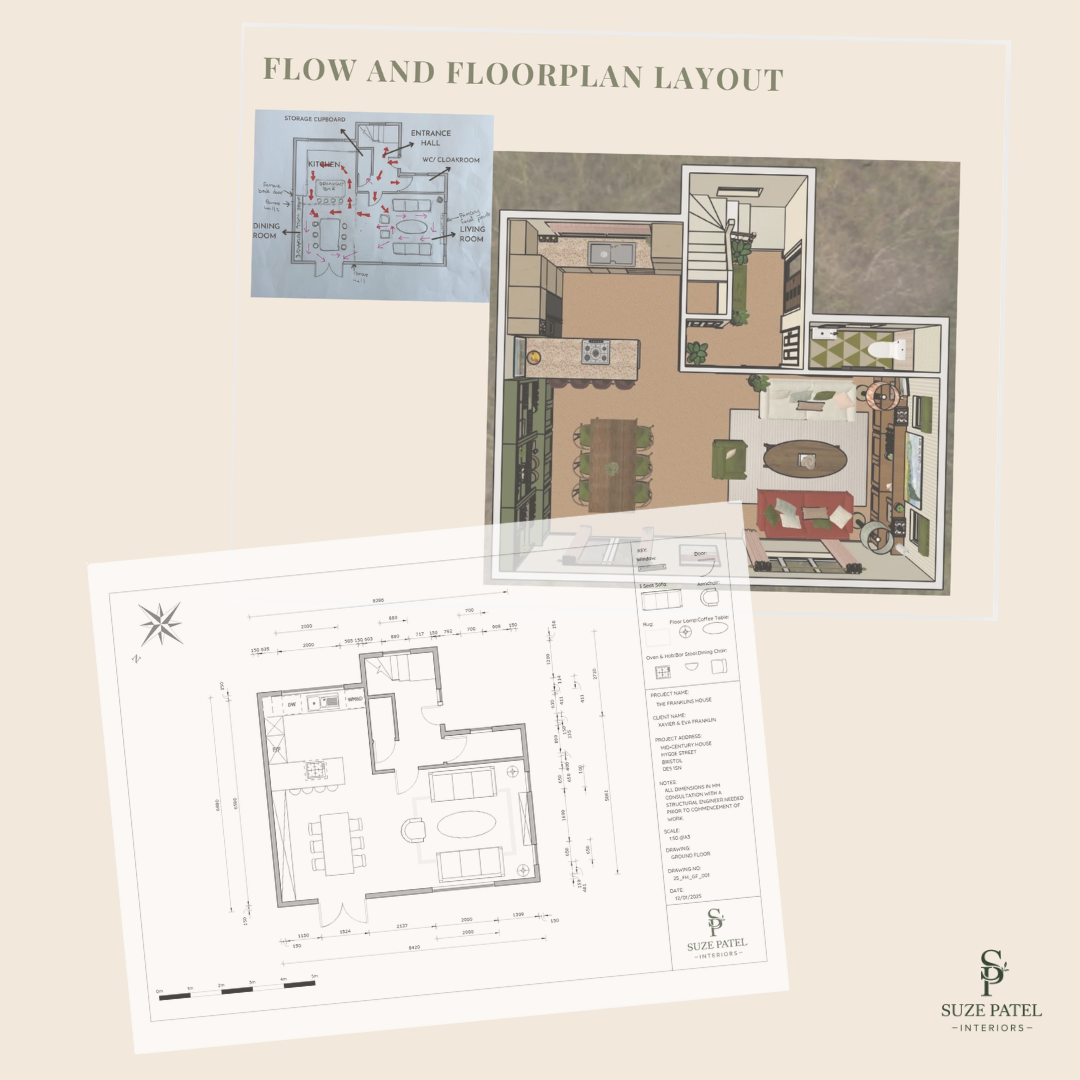
Space planning is one of the most underestimated parts of design. A room can contain lovely furniture and still feel awkward.
I consider proportions, circulation, sightlines, and how each area connects to the next. Where natural light falls. How seating supports conversation. Whether a layout feels grounded or disjointed.
Good flow is rarely noticed consciously, but it is always felt.
Cohesion: Materials, Colours and Finishes
A cohesive scheme isn’t about matching everything. It’s about balance.
I layer materials, textures and tones so they feel intentional rather than accidental. Matte beside soft sheen. Structure beside something organic. Warmth balanced with restraint.
This is where experience matters. Knowing how finishes will sit together, how undertones interact, and how to create depth without overwhelming the space.
Technical Detail: The Things You Don’t See
Lighting layers. Scale. Joinery details. Practical durability. Lead times. Electrical positioning.
These decisions determine whether a room simply looks good in photographs or genuinely works for years to come.
Designing lighting alone involves considering ambient, task and accent layers, as well as how artificial light complements natural daylight. It’s this technical backbone that supports the aesthetic.
Sourcing and Budget Control
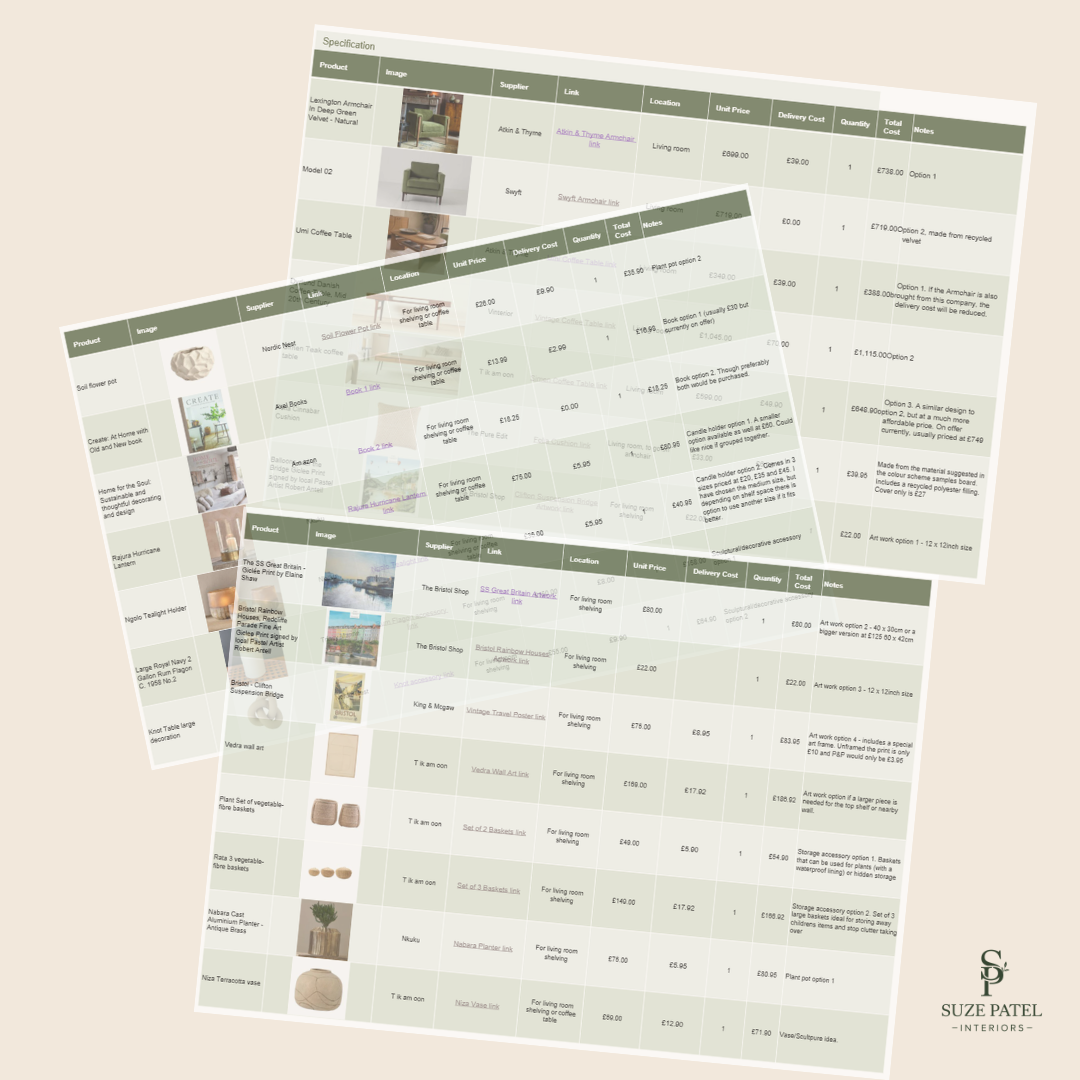
Part of my role is protecting your investment.
I source pieces that align with the design vision, track lead times, suggest alternatives when needed, and ensure that the scheme stays balanced financially. A beautiful home should feel considered, not chaotic or reactive.
Installation and Final Styling
Finally, I oversee installation so the design is executed exactly as envisioned.
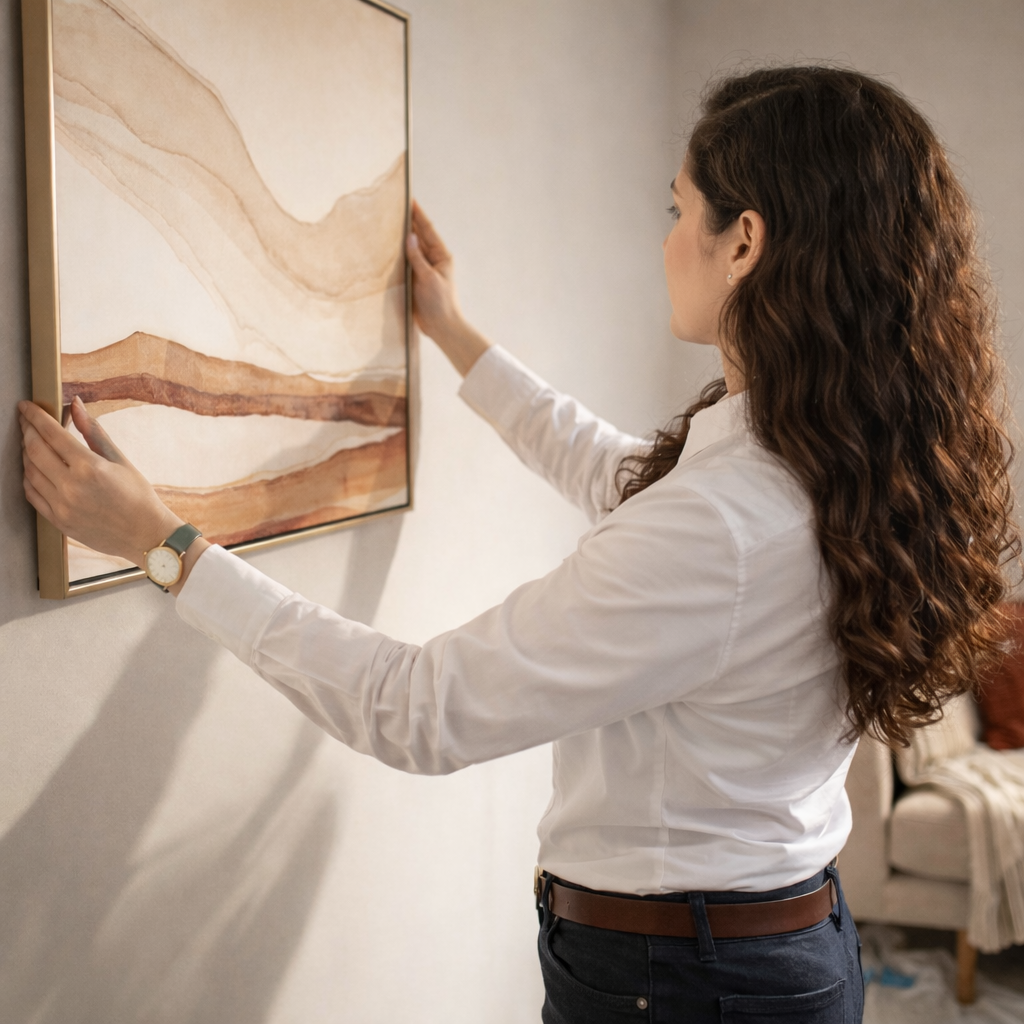
This stage is about precision. Artwork placement. Final adjustments. Ensuring every element sits exactly as it should.
It’s where a creative, considered approach, and close attention to detail, ensures everything is executed beautifully and feels truly complete.