
Which Plants Work Best in Different Areas of the Home
Indoor plants can do far more than decorate a space; they soften it, ground it, and shape how a room feels to live in. In biophilic design, greenery is not an accessory but part of the architecture of natural interiors. Choosing the right houseplants for different rooms, particularly within UK homes, ensures they thrive while enhancing calm, balanced spaces.
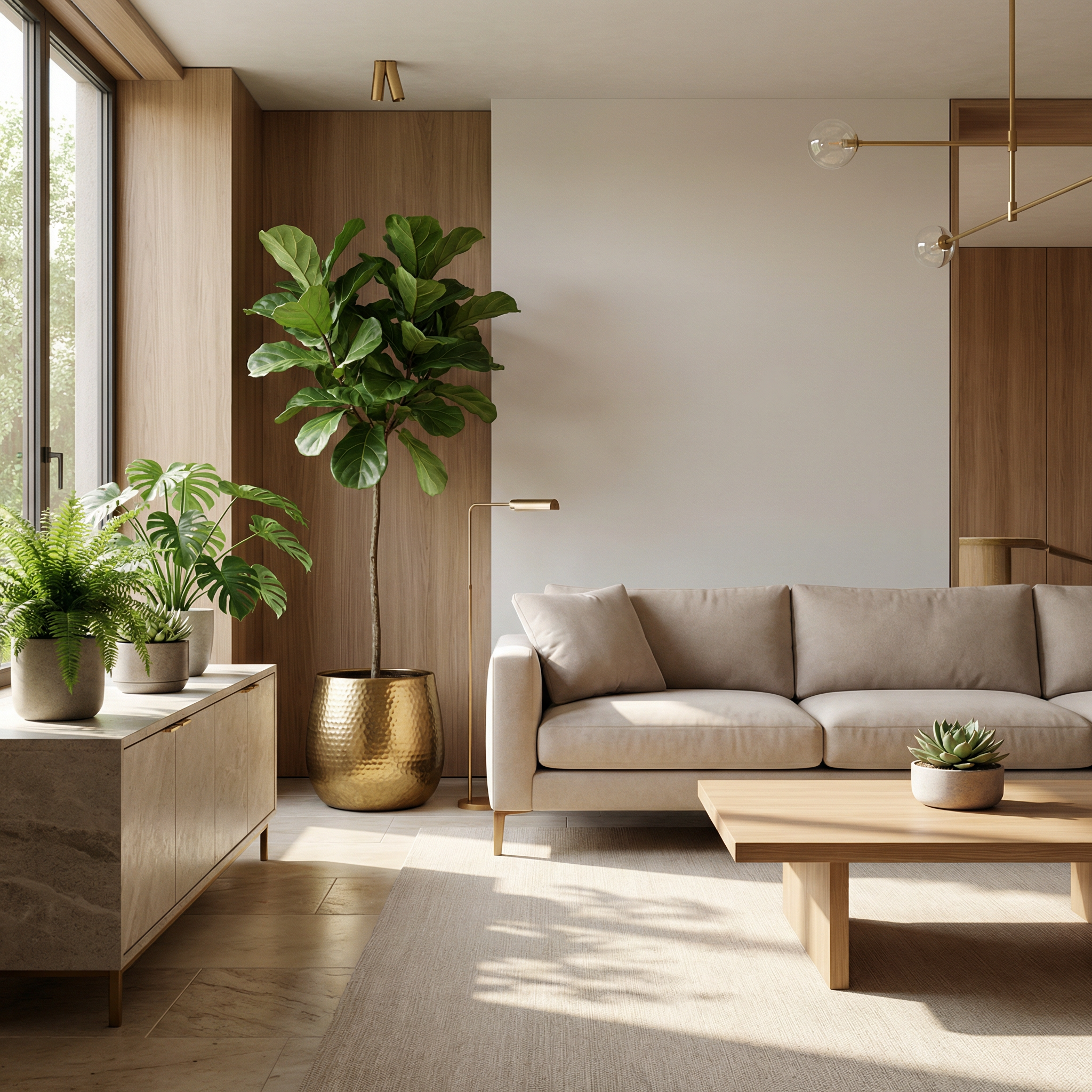
Thoughtful placement matters just as much as the plant itself. Light levels, humidity, temperature fluctuations, and how a room is used should guide your decisions. When plants are selected with intention, they feel effortless rather than demanding.
The Bedroom: Restorative and Undemanding
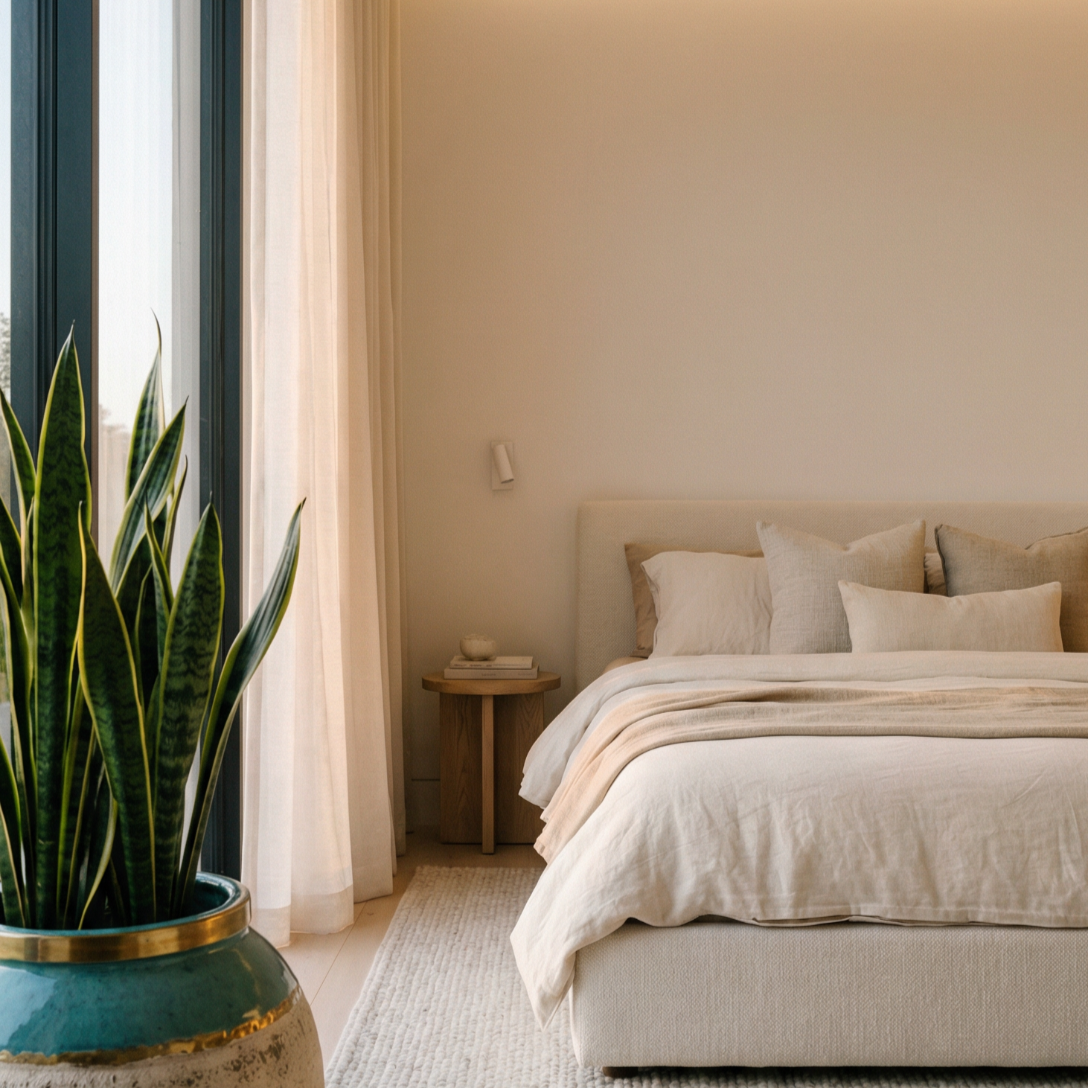
Bedrooms call for stillness. The plants you introduce here should feel quiet and architectural rather than sprawling or attention-seeking.
The Snake Plant, also known as Sansevieria or Dracaena trifasciata, works beautifully in this context. It tolerates lower light levels, copes well with cooler night temperatures, and requires infrequent watering. It also uses CAM photosynthesis, meaning it releases oxygen at night rather than during the day. It was included in the Clean Air Study conducted by NASA, although it is worth noting that the study took place in controlled conditions rather than typical homes.
Beyond the science, its upright form brings gentle structure without visual noise. Positioned beside a bed or in a quiet corner, it adds presence without disturbing the sense of rest.
The Living Room: Structure and Softness
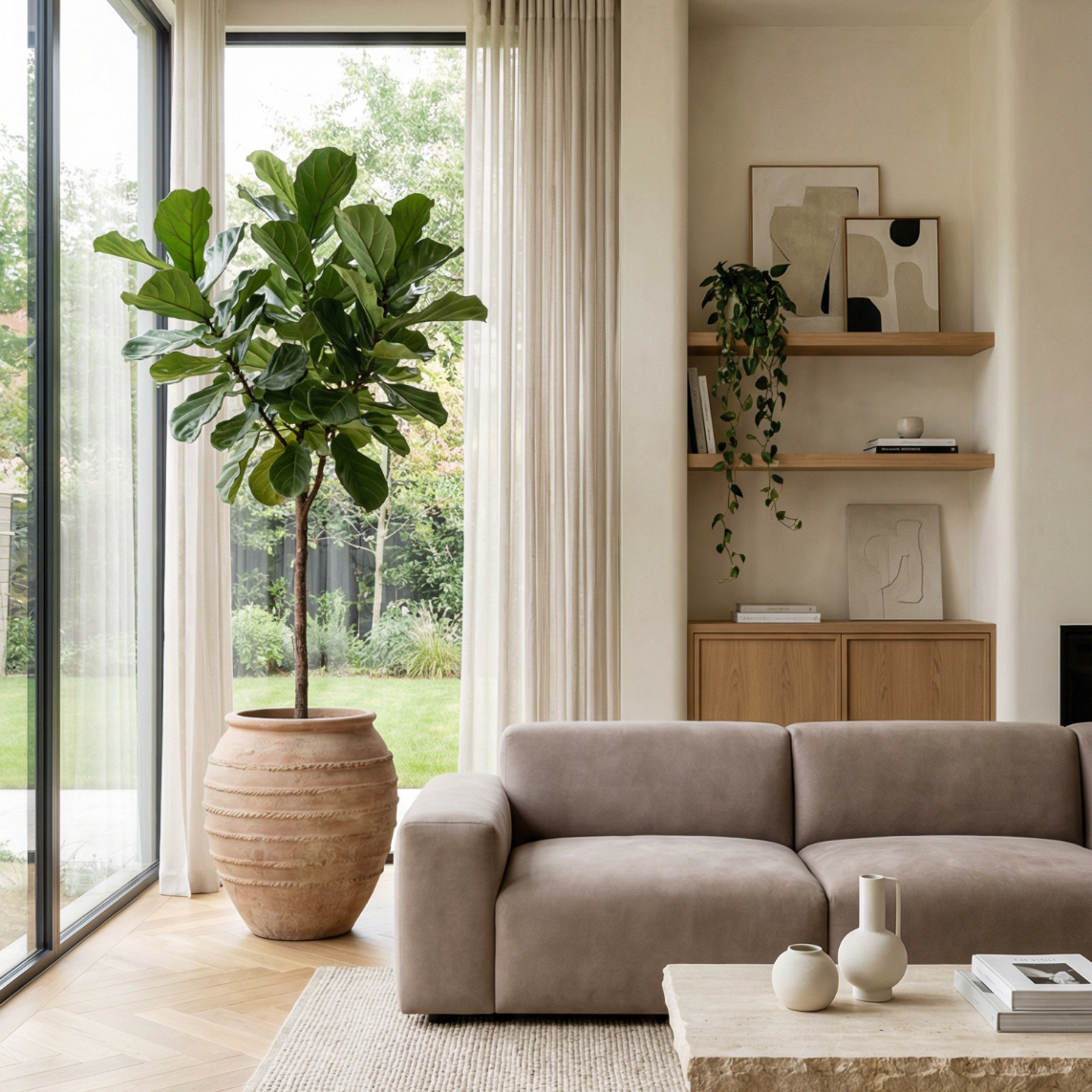
Living rooms in UK homes often receive the best natural light, making them ideal for larger statement greenery. This is where scale can be introduced thoughtfully.
Ficus varieties, such as the Fiddle Leaf Fig or the Rubber Plant, bring height and maturity to a space. Their broad leaves catch light beautifully and create contrast against linen upholstery, plaster walls, or timber finishes. When placed intentionally, a Ficus can anchor a seating area and subtly guide the eye, helping the room feel balanced.
However, these plants do appreciate consistency. Bright, indirect light and a stable position away from cold drafts are important. In biophilic design, larger plants often act almost like furniture; they define space while softening it.
The Bathroom: Humidity as an Advantage
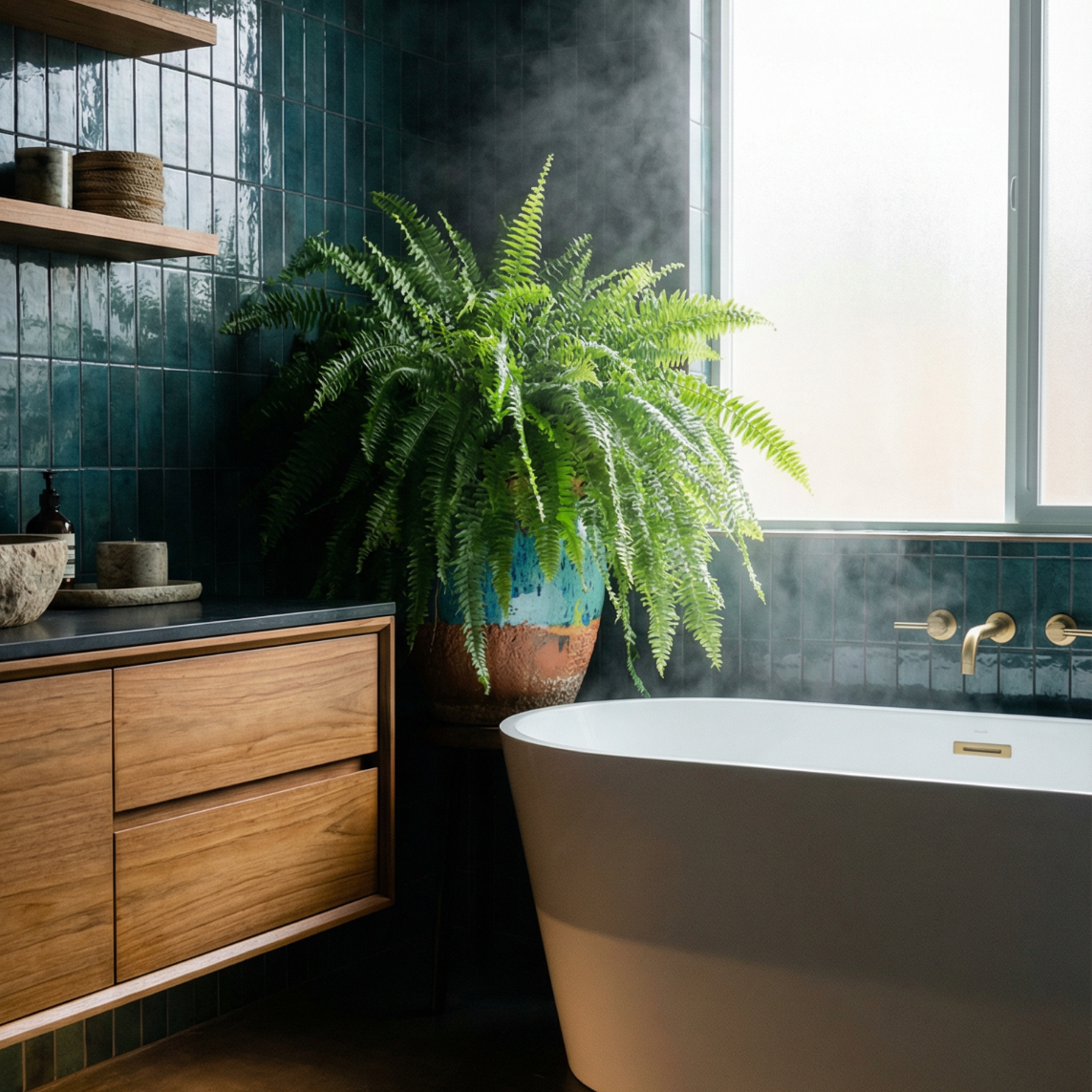
Bathrooms are frequently overlooked as places for greenery, yet they can offer one of the most suitable environments in the home. The natural humidity created by showers and baths provides conditions that many plants would struggle to find elsewhere.
The Boston Fern thrives in this atmosphere. Its soft, feathery fronds contrast beautifully with harder surfaces such as tiles, stone, and ceramics. Where bathrooms can sometimes feel clinical, a fern introduces movement and texture, creating a more spa-like quality.
Natural light is still important, but indirect light is usually sufficient. In smaller bathrooms, rotating the plant occasionally can help maintain vitality. When chosen well, a plant in a bathroom feels less decorative and more atmospheric.
The Kitchen: Practical and Forgiving
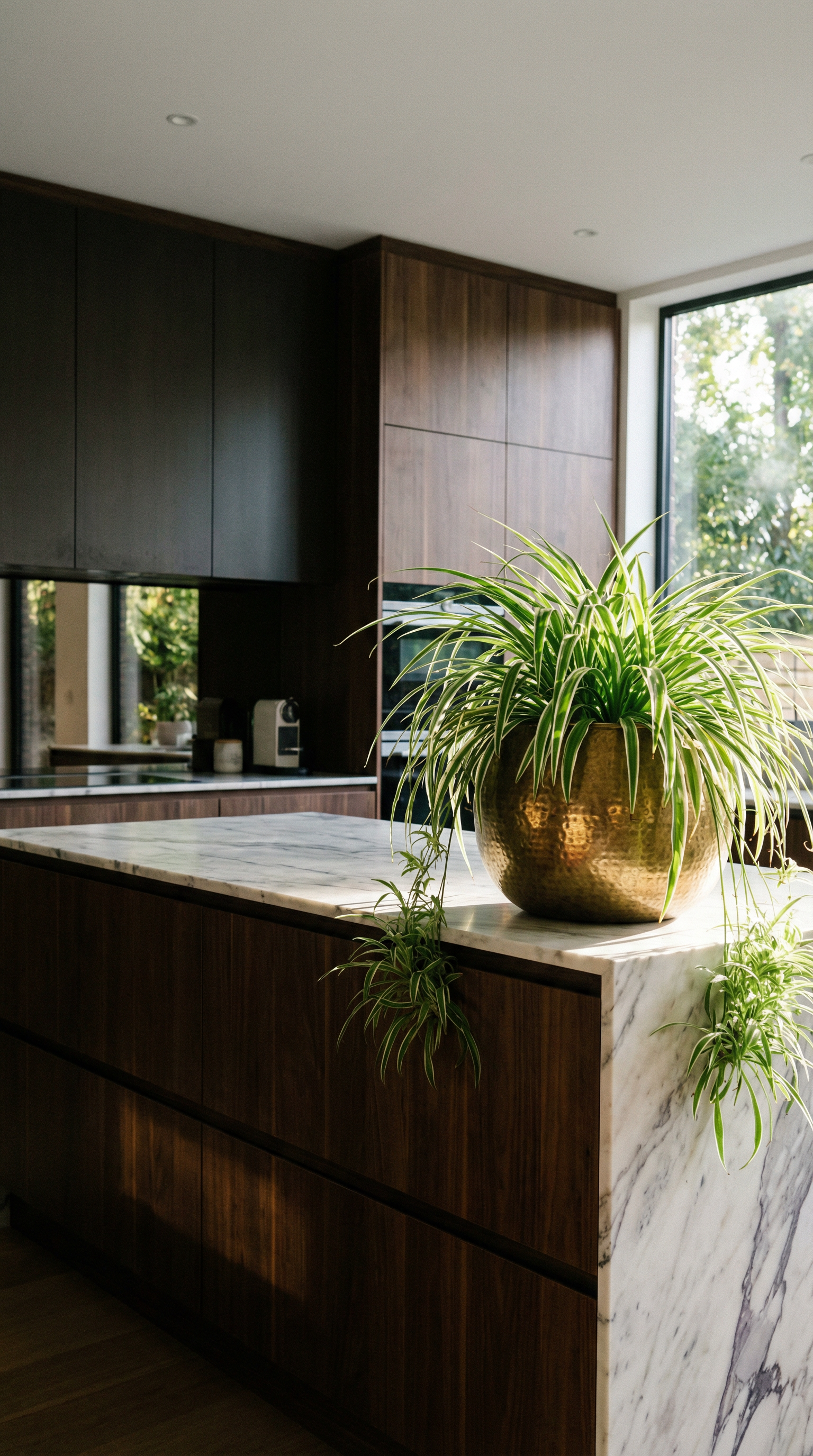
Kitchens are active spaces. Temperatures fluctuate, light can be strong, and routines are busy. Plants placed here need to cope with change and still feel effortless.
The Spider Plant is one of the most forgiving options. It tolerates a range of light conditions and irregular watering, making it particularly suitable for shelves, windowsills, or hanging planters. Its arching leaves soften cabinetry and introduce gentle movement, counterbalancing harder finishes such as worktops and appliances.
In a kitchen, greenery should not feel precious. It should feel integrated, as though it belongs to the everyday flow of the room.
Placement Over Quantity
Biophilic design is not about filling every corner with indoor plants. It is about selecting houseplants that align with the function and atmosphere of each space. When greenery is chosen thoughtfully for living rooms, bedrooms, bathrooms, and kitchens, it becomes part of the emotional language of the home, supporting wellbeing and connection to nature.
Start with one room. Choose one plant. Let it settle naturally into your space.